
Nutritional Composition, Antioxidant Properties, and in vitro Alpha-Glucosidase Inhibitory Effects of Functional Biscuits Fortified with Ficus exasperata and Sphenostylis stenocarpa
-
Sidiqat A. Shodehinde
Department of Biochemistry, Faculty of Science, Adekunle Ajasin University, Akungba-Akoko, Nigeria
Lateef Bello

Phyto-Fakts Laboratory, Akungba-Akoko, Nigeria
Olamide V. AwelewaPhyto-Fakts Laboratory, Akungba-Akoko, Nigeria
Joy O. OgunwarePhyto-Fakts Laboratory, Akungba-Akoko, Nigeria
Joshua A. ChikaDepartment of Biochemistry, Faculty of Science, Adekunle Ajasin University, Akungba-Akoko, Nigeria
Faithfulness I. AdeyemoDepartment of Biochemistry, Faculty of Science, Adekunle Ajasin University, Akungba-Akoko, Nigeria
Samuel A. OginniDepartment of Biochemistry, Faculty of Science, Adekunle Ajasin University, Akungba-Akoko, Nigeria
Daniel O. NwankwoDepartment of Biochemistry, Faculty of Science, Adekunle Ajasin University, Akungba-Akoko, Nigeria
Oluwadamilola V. AwojuluPhyto-Fakts Laboratory, Akungba-Akoko, Nigeria
Busola E. AjaoDepartment of Biochemistry, Faculty of Science, Adekunle Ajasin University, Akungba-Akoko, Nigeria
Oluwadaisi T. OgunmakinDepartment of Biochemistry, Faculty of Science, Adekunle Ajasin University, Akungba-Akoko, Nigeria
Favour D. AwojuluDepartment of Biochemistry, Faculty of Science, Adekunle Ajasin University, Akungba-Akoko, Nigeria
Greatness B. IwaloyeDepartment of Biochemistry, Faculty of Science, Adekunle Ajasin University, Akungba-Akoko, Nigeria
Success O. OlubodePhyto-Fakts Laboratory, Akungba-Akoko, Nigeria
Caroline O. OmohiomoriaDepartment of Biochemistry, Faculty of Science, Adekunle Ajasin University, Akungba-Akoko, Nigeria
Salewa E. DaramolaDepartment of Biochemistry, Faculty of Science, Adekunle Ajasin University, Akungba-Akoko, Nigeria
Janet AdeleyeDepartment of Biochemistry, Faculty of Science, Adekunle Ajasin University, Akungba-Akoko, Nigeria
Olubisi K. OlupojuDepartment of Biochemistry, Faculty of Science, Adekunle Ajasin University, Akungba-Akoko, Nigeria
Favour OdeyemiDepartment of Biochemistry, Faculty of Science, Adekunle Ajasin University, Akungba-Akoko, Nigeria
| Received 13 Jun, 2026 |
Accepted 30 Jul, 2026 |
Published 20 Aug, 2026 |
Background and Objective: Oxidative stress and postprandial hyperglycemia are major contributors to the development and progression of diabetes mellitus. Functional foods enriched with bioactive plant ingredients represent a promising dietary strategy for improving antioxidant status and regulating postprandial glucose levels. This study evaluated the nutritional composition, antioxidant properties, α-glucosidase inhibitory activity, and sensory acceptability of functional biscuits fortified with Sphenostylis stenocarpa and Ficus exasperata. Materials and Methods: Four biscuit formulations containing varying proportions of S. stenocarpa and fermented or unfermented F. exasperata were developed. The formulations were analyzed for total phenolic content (TPC), total flavonoid content (TFC), ABTS radical scavenging activity, Fe2+ chelating activity, ferric reducing antioxidant power (FRAP), and in vitro α-glucosidase inhibitory activity. The two formulations containing 40 g F. exasperata (B-SS20-fFE40 and B-SS20-uFE40) were further evaluated for proximate composition and sensory attributes. Statistical analysis was performed using GraphPad Prism 8.1 by one-way ANOVA followed by Tukey’s test; data are presented as Mean±SEM (n = 3), with p<0.05 considered significant. Results: All formulations exhibited appreciable TPC, Fe2+ chelating activity, and ABTS radical scavenging capacity, with no significant differences (p>0.05) among the groups. However, B-SS20-fFE40 showed significantly higher TFC and FRAP than the other formulations. All extracts demonstrated moderate α-glucosidase inhibitory activity. Proximate analysis revealed that B-SS20-fFE40 contained the highest crude protein (10.51±0.717%), while B-SS20-uFE40 had the highest crude fibre content (6.89±0.065%). Sensory evaluation indicated that B-SS20-uFE40 achieved the highest overall consumer acceptability score. Conclusion: Fortification of biscuits with S. stenocarpa and F. exasperata significantly improved their nutritional value and antioxidant potential while providing moderate in vitro α-glucosidase inhibitory activity. Fermentation enhanced flavonoid availability and protein content, whereas the unfermented formulation offered greater dietary fibre and superior sensory acceptability. These findings suggest that the developed functional biscuits have potential as supportive dietary snacks for reducing oxidative stress and assisting in the management of postprandial blood glucose levels.
| Copyright © 2026 Shodehinde et al. This is an open-access article distributed under the Creative Commons Attribution License, which permits unrestricted use, distribution, and reproduction in any medium, provided the original work is properly cited. |
INTRODUCTION
Diabetes is a long-term metabolic condition marked by constantly high blood sugar due to poor insulin production, ineffective insulin use, or both. This state often triggers abnormal cholesterol levels and cellular stress, causing gradual damage to the heart, blood vessels, kidneys, nerves, and eyes1,2. Type 2 diabetes, the most common form, stems primarily from insulin resistance and malfunctioning pancreatic beta cells. Cell-damaging oxidative stress heavily drives diabetic complications, as excess reactive oxygen molecules disrupt insulin signaling and destroy beta cells3.
The global burden of diabetes continues to increase rapidly. According to the International Diabetes Federation, millions of individuals currently live with diabetes worldwide, and the number is projected to rise substantially in the coming decades. Although several pharmacological agents are available for glycemic control, including biguanides, sulfonylureas, thiazolidinediones, α-glucosidase inhibitors, DPP-4 inhibitors, GLP-1 receptor agonists, SGLT2 inhibitors, and insulin, their use may be limited by adverse effects, cost, and accessibility challenges, particularly in low-resource settings4-6. Consequently, increasing attention has been directed toward medicinal plants and plant-based functional foods as complementary dietary strategies for managing hyperglycemia and oxidative stress.
Plant-based foods are rich sources of bioactive compounds, including phenolics, flavonoids, tannins, alkaloids, saponins, and dietary fibre, many of which possess antioxidant and antidiabetic activities7. In particular, inhibition of carbohydrate-hydrolyzing enzymes such as α-glucosidase is an important therapeutic target for reducing postprandial blood glucose elevation. Foods or plant extracts capable of inhibiting α-glucosidase may slow intestinal glucose absorption and contribute to improved glycemic control.
Sphenostylis stenocarpa, commonly known as African yam bean, is an underutilized legume indigenous to West and Central Africa. It is nutritionally valuable due to its appreciable protein content, dietary fibre, minerals, and slow-digesting carbohydrates. Previous studies have reported its antioxidant, antihyperglycemic, hypolipidemic, and low-glycemic properties, suggesting its potential application in functional food development8-10. Despite these nutritional advantages, S. stenocarpa remains underutilized in industrial food production.
Ficus exasperata, widely called the sandpaper leaf tree, belongs to the Moraceae plant family. Found throughout tropical and subtropical areas, it is a traditional herbal remedy for treating diverse medical issues11,12. The leaves contain diverse bioactive compounds, including phenolic acids, flavonoids, tannins, saponins, alkaloids, and glycosides, which have been associated with antioxidant, hypoglycemic, hypolipidemic, anti-inflammatory, antimicrobial, and other pharmacological effects13-16. Recent studies have also shown that F. exasperata may positively modulate insulin-signaling pathways in diabetic models17,18.
Processing methods such as fermentation may further improve the biological quality of plant-based foods. Fermentation can reduce antinutritional factors, improve mineral bioavailability, and release bound phenolic compounds, thereby enhancing antioxidant activity and overall nutritional value19. Therefore, incorporating fermented or unfermented F. exasperata leaf powder with S. stenocarpa flour into a commonly consumed food product may provide a practical approach for developing affordable functional foods with potential antidiabetic benefits.
Biscuits are widely consumed, ready-to-eat baked products valued for their affordability, convenience, palatability, and relatively long shelf-life20. Their broad consumer acceptance makes them suitable vehicles for delivering functional ingredients. Partial substitution of wheat flour with S. stenocarpa flour and fortification with F. exasperata leaf powder may enhance the nutritional and therapeutic value of biscuits.
Although the individual health-promoting properties of S. stenocarpa and F. exasperata have been documented, limited information exists on their combined incorporation into biscuit formulations. In particular, the proximate composition, phenolic and flavonoid contents, antioxidant properties, sensory acceptability, and α-glucosidase inhibitory potential of biscuits fortified with these plant materials remain insufficiently characterized. Therefore, this study evaluated the nutritional composition, antioxidant activity, and in vitro α-glucosidase inhibitory effects of functional biscuits fortified with Sphenostylis stenocarpa and fermented or unfermented Ficus exasperata leaf powder.
MATERIALS AND METHODS
Study area and duration: The study was conducted in Akungba-Akoko, a semi-rural settlement in Ondo State where farming and food trading are the primary occupations. Ondo State is bordered by Edo and Delta States to the East, Ogun and Osun States to the West, Ekiti and Kogi states to the North, and the Atlantic Ocean to the South. It is situated between Latitudes 5°45'N and 7°52'N, and Longitudes 4°20'E and 6°05'E. All analyses were performed between March and April 2026 at the Phyto-Fakts Health Product Laboratory in Akungba-Akoko, Ondo State, Nigeria.
Collection of plant samples: Fresh leaves of Ficus exasperata were obtained from the wild in Akungba Akoko, Ondo State, Nigeria. The raw ingredients required for biscuit formulation and Sphenostylis stenocarpa bean seeds were purchased at Osele Market in Ikare Akoko, Ondo State, Nigeria [7.5248°N, 5.7669°E]. The plant samples were identified and authenticated by Dr. Olutayo Ademola Obembe, a plant taxonomist. Voucher specimens were deposited with ID-253 for Ficus exasperata and ID-257 for Sphenostylis stenocarpa (Hochst. ex A. Rich) at the Plant Science and Biotechnology Department Herbarium and Taxonomic Unit (PSBHTU), Adekunle Ajasin University, Akungba-Akoko, Ondo State, Nigeria.
Preparation of plant samples: Ficus exasperata Leaf Powder was prepared according to the method described by Shodehinde et al.21 as reported by Bello et al.16. Preparation of Ficus exasperata leaf powder involved washing fresh leaves with potable water, shading them to drain, and then fermenting some wrapped in several layers of plantain leaves while air-drying others for three weeks. Both fermented and unfermented samples were pulverized, sieved for uniformity, and stored in airtight containers for biscuit fortification. Sphenostylis stenocarpa (African Yam Bean) mature seeds were sorted, rinsed, dried, and milled into fine flour, which was also stored in airtight containers for biscuit formulation.
Preparation of functional biscuits: The functional biscuits were formulated22. Wheat flour was partially substituted with Ficus exasperata and Sphenostylis stenocarpa to investigate dose-dependent synergistic interactions and the effect of fermentation on the bioactivity of the formulations. The blends were prepared in reciprocal ratios (20:40 and 40:20), and separate formulations were produced using fermented and unfermented Ficus exasperata. The production process for the biscuits follows the guideline23 with minor adjustments. After 40 minutes of mixing, each sample blend listed in Table 1 produced dough with a nice texture and a hint of firmness. For four minutes, the dough was kneaded on a spotless, flat stainless steel table. A biscuit cutter was used to cut the mixture into shapes after it had been manually rolled into sheets. The dough was baked for 30 minutes at 150°C. After being taken out of the oven, the biscuits were left to come to room temperature. After that, they were packaged and kept for later examination at room temperature.
Preparation of functional biscuits extracts: The prepared biscuits were pulverized into powder form and the extract of each sample was prepared by measuring 5 g into 100 mL of distilled water, each in separate bottles. The mixtures were shaken in a water bath for uniformity, filtered through filter paper, and the resulting filtrates were used in biochemical assays to evaluate the in vitro antioxidant and α-Glucosidase Inhibitory activities of the samples.
| Table 1: | Formulation of functional biscuits | |||
| Ingredient | B-SS40-fFE20 | B-SS20-fFE40 | B-SS40-uFE20 | B-SS20-uFE40 |
| Ficus exasperata (g) | 20 | 40 | 20 | 40 |
| Sphenostylis stenocarpa (g) | 40 | 20 | 40 | 20 |
| Wheat flour (g) | 140 | 140 | 140 | 140 |
| Sugarcane (g) | 60 | 60 | 60 | 60 |
| Fat (g) | 40 | 40 | 40 | 40 |
| Salt (g) | 2 | 2 | 2 | 2 |
| Vanila (g) | 1 | 1 | 1 | 1 |
| Water (mL) | 65 | 65 | 65 | 65 |
| GMS (EULSIFIER) (mg) | 0.5 | 0.5 | 0.5 | 0.5 |
| B-SS40-fFE20 = 40 g Sphenostylis stenocarpa+20 g fermented Ficus exasperata biscuit B-SS20-fFE40 = 20 g Sphenostylis stenocarpa+40 g fermented Ficus exasperata biscuit B-SS40-uFE20 = 40 g Sphenostylis stenocarpa+20 g unfermented Ficus exasperata biscuit B-SS20-uFE40 = 20 g Sphenostylis stenocarpa+40 g unfermented Ficus exasperata biscuit |
||||
In vitro assays determination
Determination of total phenol content: The total phenol content was determined according to the method of Singleton et al.24. Briefly, appropriate dilutions of the food samples extracts were oxidized with 2.5 mL of 10% Folin-Ciocalteu’s reagent (v/v) and neutralized by 2.0 mL of 7.5% sodium carbonate. The reaction mixture was incubated for 40 minutes at 45°C and the absorbance was measured at 765 nm. The total phenol content was subsequently calculated as gallic acid equivalent (GAE).
Determination of flavonoids content: The total flavonoid content of the food samples extract was determined using a slightly modified method reported by Meda et al.25. Briefly, 0.5 mL of appropriately diluted sample was mixed with 0.5 mL methanol, 50 μL of 10% AlCl3, 50 μL of 1 M potassium acetate and 1.4 mL water, and allowed to incubate at room temperature for 30 min. Thereafter, the absorbance of the reaction mixture was subsequently measured at 415 nm. The total flavonoids content was subsequently calculated as quercertin equivalent (QUE).
Determination of ferric reducing antioxidant power: The Ferric reducing antioxidant Power of the food samples extract was determined by assessing the ability of the extract to reduce FeCl3 solution, as described by Oyaizu26. A 2.5 mL aliquot was mixed with 2.5 mL of 200 mM sodium phosphate buffer (pH 6.6) and 2.5 mL of 1% potassium ferricyanide. The mixture was incubated at 50°C for 20 minutes. Following this, 2.5 mL of 10% trichloroacetic acid was added, and the mixture was centrifuged at 650 rpm for 10 minutes. Then, 5 mL of the supernatant was mixed with an equal volume of water and 1 mL of 0.1July 28, 2026% ferric chloride, and the absorbance was measured at 700 nm. Finally, the ferric reducing antioxidant Power was subsequently calculated as Ascorbic acid equivalent (AAE).
Fe2+ Chelation: The ability of the sample to chelate Fe2+ was determined using a modified method of Minotti and Aust27 with a slight modification by Puntel et al.28. Freshly prepared 500mM FeSO4 (150 μL) was added to a reaction mixture containing 168 μL 0.1-M Tris-HCl (pH 7.4), 218 μL saline and the aqueous extract (0-25 μL). The reaction mixture was incubated for 5 min before the addition of 13 μL 0.25% 1, 10-phenanthroline (w/v). The absorbance was subsequently measured at 510 nm in a spectrophotometer.
ABTS radical scavenging ability: The total antioxidant power of the extracts was assessed using the ABTS radical model29. The ABTS radical was g enerated by reacting 7 mmol/L of ABTS aqueous solution with 2.45 mmol/L of K2S2O8 solution in the dark for 16 hrs and adjusting the absorbance at 734 nm to 0.700 with ethanol. Two hundred microliters of the appropriate dilution of the sample extract was added to 2.0 mL. The absorbance was measured at 734 nm after 15 min.
α-Glucosidase inhibition assay: Fifty microliters of appropriate dilution of the food sample extracts were added to 100 μL of the α-glucosidase solution (1.0 U/mL) in 1.0 M phosphate buffer (pH 6.9) and incubated at 25°C for 10 min. Fifty microliters of 5 mM p-nitrophenyl-α-D glucopyranoside solution in 0.1 M phosphate buffer (pH 6.9) was subsequently added. The reaction mixture was incubated at 25°C for 5 min, and the absorbance was read at 405 nm in the spectrophotometer. The α-Glucosidase inhibitory activity of the food sample extract was calculated.
Proximate analysis
Proximate analysis of food samples: Based on the preliminary in vitro screening, which demonstrated that the 40 g inclusion level of Ficus exasperata (both fermented and unfermented) in the biscuit sample fortified with Sphenostylis stenocarpa-Ficus exasperata, yielded significantly higher phenolic content and antioxidant activity compared to the 20 g level, these two formulations were selected as the “Optimal Lead Samples”. Consequently, proximate analysis was focused on these 40 g variants to provide a comprehensive nutritional characterization of the most bioactive formulations.
The proximate composition of the biscuit samples-including moisture, ash, crude fat, crude fiber, crude protein, and carbohydrate content-was determined using standard methods outlined by the Association of Official Analytical Chemists30. Carbohydrate was determined by difference as follows:
Sensory analysis: This study conducted a sensory analysis following verbal consultation with the institutional ethical board, which confirmed that the study posed no health risks and did not necessitate formal ethical approval. All participants gave their informed verbal agreement, and the study adhered to institutional ethical research norms. During or after the sensory analysis, no negative incidents were documented. Twenty panelists were assigned within 24 hours of manufacturing to conduct sensory analysis. The personnel from Food Science & Technology and Biochemistry served as panelists. The panelists were instructed to evaluate the coded samples for color, taste, aroma, mouth feel, and overall acceptability. All panelists participating in the sensory analysis were thoroughly briefed on the evaluation process, including the scoring criteria and sensory attributes to be assessed, to ensure consistency and reliability in their feedback. Each sensory attribute was rated on a 9-point hedonic scale (1 = dislike extremely and 9 = like extremely). The panelists were given water to rinse their mouths after each evaluation.
Statistical analysis: GraphPad Prism 8.1 was used for the statistical analysis, all antioxidant studies were performed in triplicate, and statistical significance was evaluated using One-way Analysis of Variance (ANOVA), followed by Tukey’s multiple range tests to compare the means. Data points correspond to the mean of independent experiments and error bars (S.E.M); the level of significance was set at p<0.05.
|
|
RESULTS AND DISCUSSION
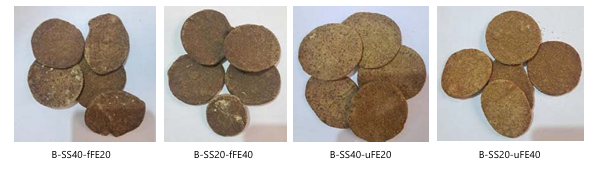
In vitro antioxidant activity and α-glucosidase inhibition: Functional biscuits fortified with Sphenostylis stenocarpa and either fermented or unfermented Ficus exasperata were successfully produced and evaluated for their phytochemical composition, antioxidant capacity, α-glucosidase inhibitory activity, proximate composition, and sensory acceptability. The prepared biscuits showed an acceptable physical appearance after baking, indicating that partial substitution of wheat flour with S. stenocarpa flour and fortification with F. exasperata leaf powder did not negatively affect biscuit formation or structural integrity (Fig. 1). Similar observations have been reported in functional bakery products, where incorporation of legume- or plant-based ingredients improved nutritional quality while maintaining acceptable product characteristics31,32.
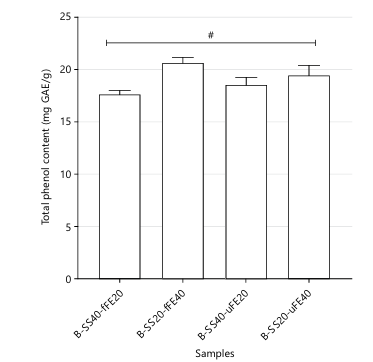
The total phenolic content of the biscuit samples is shown in Fig. 2. All formulations exhibited appreciable phenolic content, with no significant difference among the groups (p>0.05). This indicates that both fermented and unfermented F. exasperata-fortified biscuits retained phenolic compounds after baking. Phenolic compounds are vital plant byproducts with powerful antioxidant effects. They neutralize harmful free radicals by donating electrons or hydrogen atoms to stabilize them33,34. The presence of phenolic compounds in the biscuits is nutritionally relevant. This is because oxidative stress is a primary driver in Bars are represented in Mean±SEM, Values are significantly different **0.001≤p≤0.01 compared to B-SS40-fFE20, #0.001≤p≤0.01 and #0.0001≤p≤0.001 compared to B-SS20-fFE40 the development and worsening of diabetes and its related health complications35. Therefore, the phenolic content observed in all formulations suggests that these biscuits may contribute to dietary antioxidant protection.
|
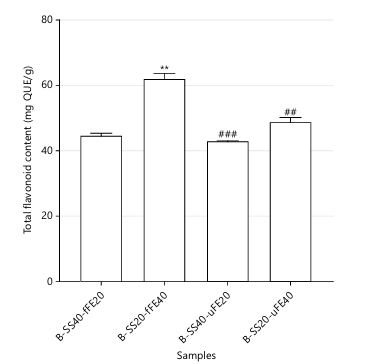
The total flavonoid content varied significantly among the biscuit formulations (Fig. 3). The formulations containing 40 g of F. exasperata, particularly B-SS20-fFE40 and B-SS20-uFE40, generally showed improved flavonoid content compared with formulations containing 20 g of F. exasperata. This suggests that increasing the level of F. exasperata enhanced the flavonoid composition of the biscuits. Flavonoids are well-known bioactive compounds with antioxidant, anti-inflammatory, and antidiabetic properties36,37. The relatively higher flavonoid level observed in the fermented formulation may be associated with fermentation-induced breakdown of plant cell wall structures, which can release bound phenolics and flavonoids and improve their extractability16,38. Thus, fermentation may have enhanced the availability of some bioactive compounds in F. exasperata.
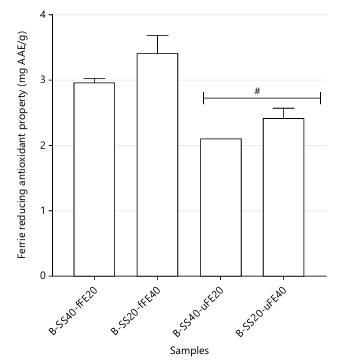
The ferric reducing antioxidant power of the biscuit samples is presented in Fig. 4. The results showed that the biscuits possessed ferric reducing ability, with some significant variation among formulations. Ferric reducing antioxidant power reflects the electron-donating capacity of antioxidants and is commonly used as an index of reducing potential27,39. The reducing ability of the biscuits may be attributed to the combined effects of phenolics, flavonoids, and other antioxidant phytochemicals present in F. exasperata and S. stenocarpa. This is important because compounds with reducing power can neutralize oxidants and interrupt free radical chain reactions, thereby protecting cells from oxidative damage40.
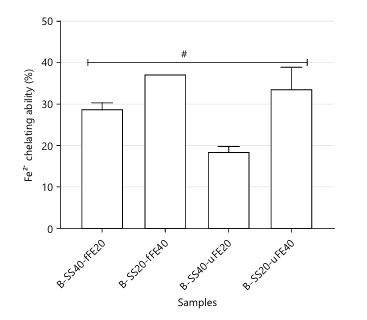
The Fe2+ chelating ability of the biscuit extracts is shown in Fig. 5. All samples demonstrated iron-chelating capacity, although no significant difference was observed among the formulations (p>0.05). Metal chelation is an important antioxidant mechanism because transition metals such as iron can catalyze the formation of highly reactive hydroxyl radicals through Fenton-type reactions27,40. By chelating Fe2+, the biscuit extracts may reduce metal-induced oxidative damage. The comparable chelating activities observed among the formulations suggest that both fermented and unfermented samples contained bioactive compounds capable of binding metal ions.
|
|
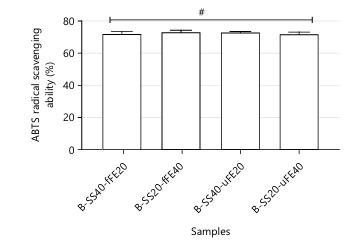
The ABTS radical scavenging activity of the biscuit samples is presented in Fig. 6. All formulations showed ABTS radical scavenging ability, with no significant difference among the groups (p>0.05). The ABTS assay is widely used to assess the ability of antioxidants to quench radical cations and reflects the total radical scavenging potential of food extracts41. The observed activity suggests that the fortified biscuits contain antioxidant compounds capable of neutralizing free radicals. This antioxidant potential may be beneficial in reducing oxidative stress, particularly in metabolic disorders such as diabetes, where increased production of reactive oxygen species contributes to tissue damage and disease progression35.
|
|
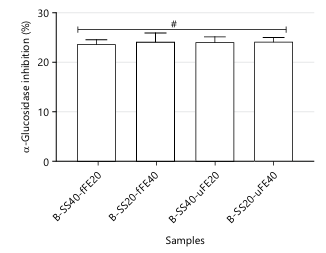
The α-glucosidase inhibitory activity of the biscuit extracts is shown in Fig. 7. All formulations moderately inhibited α-glucosidase activity, with inhibition values of approximately 23-25%, and no significant differences were observed among the samples (p>0.05). α-glucosidase is an intestinal enzyme involved in the digestion of complex carbohydrates into absorbable glucose. Inhibition of this enzyme delays carbohydrate digestion and glucose absorption, thereby reducing postprandial hyperglycemia42,43. The inhibitory activity observed in this study may be due to the presence of phenolics and flavonoids, which have been reported to inhibit carbohydrate- hydrolyzing enzymes37. Although the inhibition was moderate, the result suggests that these biscuits may have potential as functional snack products for supporting postprandial blood glucose control.
Proximate analysis and sensory evaluation: Based on the antioxidant screening results, B-SS20-fFE40 and B-SS20-uFE40 were selected for proximate analysis because they contained the higher inclusion level of F. exasperata and showed relatively stronger bioactive profiles. The proximate composition is presented in Table 2. The moisture content of B-SS20-uFE40 (6.62±0.271) was higher than that of B-SS20-fFE40 (4.97±0.125). Moisture content is an important determinant of shelf stability in baked products because high moisture can increase susceptibility to microbial spoilage and reduces storage quality31,32. Therefore, the lower moisture content of B-SS20-fFE40 may suggest better potential shelf stability.
| Table 2: | Proximate composition of functional biscuits | |||
| Proximate | B-SS20-fFE40 (%) | B-SS20-uFE40 (%) |
| Moisture content | 4.97±0.125 | 6.62±0.271 |
| Fat content | 2.38±0.142 | 2.52±0.027 |
| Ash content | 4.31±0.105 | 5.09±0.038 |
| Crude fibre | 4.46±0.238 | 6.89±0.065 |
| Crude protein | 10.51±0.717 | 7.97±0.629 |
| Carbohydrate | 73.64±0.583 | 70.91±0.434 |
| Data are represented in Mean±SD | ||
| Table 3: | Sensory evaluation of functional biscuits | |||
| Parameter | B-SS20-fFE40 | B-SS20-uFE40 |
| Color | 4.6±1.342 | 7±1 |
| Taste | 4.4±2.074 | 5.6±1.517 |
| Aroma | 4.4±1.517 | 5±1 |
| Mouth feel | 5.6±2.074 | 5.2±1.924 |
| Overall acceptability | 5.6±1.140 | 6.8±0.447 |
| Data are represented in Mean±SD | ||
The fat content of both selected formulations was relatively low, with B-SS20-uFE40 (2.52±0.027) having slightly higher fat content than B-SS20-fFE40 (2.38±0.142). Low-fat functional snacks may be beneficial for consumers seeking to reduce dietary fat intake, especially individuals at risk of obesity, cardiovascular disease, or metabolic syndrome. The ash content was higher in B-SS20-uFE40 (5.09±0.038), suggesting that the unfermented formulation may contain a higher mineral residue. Ash content provides an estimate of total mineral composition in food materials and is commonly used as an indicator of inorganic nutrient contribution30.
Crude fibre content was also higher in B-SS20-uFE40 (6.89±0.065) than in B-SS20-fFE40 (4.46±0.238). Dietary fibre is nutritionally important because it slows gastric emptying, reduces glucose absorption, improves satiety, and contributes to better glycemic regulation44,45. The higher fibre content of B-SS20-uFE40 (6.89±0.065) may therefore provide additional benefits for blood glucose management and digestive health. In contrast, crude protein content was higher in B-SS20-fFE40 (10.51±0.717). This may be due to a fermentation-related improvement in protein availability or concentration. Fermentation can enhance the nutritional quality of plant-based foods by reducing antinutritional factors and improving protein digestibility38. The protein contribution of S. stenocarpa, a leguminous crop, may also have improved the protein value of the biscuits.
Carbohydrate content was slightly higher in B-SS20-fFE40 (73.64±0.583) than in B-SS20-uFE40 (70.91±0.434). This is expected because biscuits are cereal-based baked products and generally contain high levels of carbohydrates. However, the presence of fibre, phenolics, flavonoids, and α-glucosidase inhibitory compounds may help moderate carbohydrate digestion and glucose release after consumption. Functional foods that combine carbohydrate with bioactive phytochemicals and fibre may therefore be useful in dietary strategies for glycemic control37,46.
The sensory evaluation results are shown in Table 3. B-SS20-uFE40 had the highest scores for color, taste, aroma, and overall acceptability, while B-SS20-fFE40 had the highest score for mouthfeel. The better overall acceptability of the unfermented formulation may be due to its more appealing color, milder taste, and preferable aroma. Fermentation may produce desirable nutritional changes, but it can also introduce stronger flavors or aromas that may reduce consumer preference if not properly optimized47. Since consumer acceptability is essential for the successful development of functional foods, the sensory advantage of B-SS20-uFE40 is important. However, the fermented formulation still showed acceptable sensory scores and may offer superior nutritional advantages in terms of protein content and antioxidant bioactivity.
CONCLUSION
The present study successfully demonstrated that functional biscuits fortified with Sphenostylis stenocarpa and Ficus exasperata possess appreciable phytochemical richness, antioxidant capacity, and moderate alpha-glucosidase inhibitory activity, underscoring their potential as health-promoting dietary snacks relevant to the management of oxidative stress and postprandial hyperglycemia associated with diabetes mellitus. Fermentation of F. exasperata notably enhanced total flavonoid content, ferric reducing antioxidant power, and crude protein content, while the unfermented formulation demonstrated superior dietary fibre content and consumer sensory acceptability. The formulation containing 20 g S. stenocarpa and 40 g F. exasperata was identified as the optimal inclusion ratio, with both fermented and unfermented variants offering distinct and complementary nutritional advantages. These findings collectively highlight the immense but largely underexploited potential of these indigenous African plant species as functional food ingredients and provide a compelling scientific basis for their incorporation into widely consumed baked products as an affordable, accessible, and culturally acceptable dietary strategy for supporting glycemic regulation and antioxidant defense in at-risk populations. However, in vivo studies, glycemic index determination, and bioavailability assessments are recommended to further validate the clinical relevance of these functional biscuits.
SIGNIFICANCE STATEMENT
This study demonstrates that biscuits fortified with Sphenostylis stenocarpa and Ficus exasperata are functional foods with enhanced nutritional quality, antioxidant capacity, and moderate α-glucosidase inhibitory activity. The findings highlight the potential of these affordable, plant-based biscuits as healthy dietary snacks for reducing oxidative stress, supporting glycemic control, and promoting the development of value-added functional foods.
REFERENCES
- Dastjerdi, Z.M., F. Namjoyan and M.E. Azemi, 2015. Alpha amylase inhibition activity of some plants extract of Teucrium species. Eur. J. Biol. Sci., 7: 26-31.
- Sneha, N. and T. Gangil, 2019. Analysis of diabetes mellitus for early prediction using optimal features selection. J. Big Data, 6.
- Asmat, U., K. Abad and K. Ismail, 2016. Diabetes mellitus and oxidative stress: A concise review. Saudi Pharm. J., 24: 547-553.
- Meneses, M.J., B.M. Silva, M. Sousa, R. Sá, P.F. Oliveira and M.G. Alves, 2015. Antidiabetic drugs: Mechanisms of action and potential outcomes on cellular metabolism. Curr. Pharmaceut. Des., 21: 3606-3620.
- Tran, N., B. Pham and L. Le, 2020. Bioactive compounds in anti-diabetic plants: From herbal medicine to modern drug discovery. Biology, 9.
- Roden, M. and G.I. Shulman, 2019. The integrative biology of type 2 diabetes. Nature, 576: 51-60.
- Zhang, Y.J., R.Y. Gan, S. Li, Y. Zhou, A.N. Li, D.P. Xu and H.B. Li, 2015. Antioxidant phytochemicals for the prevention and treatment of chronic diseases. Molecules, 20: 21138-21156.
- George, T.T., A.O. Obilana and S.A. Oyeyinka, 2020. The prospects of African yam bean: Past and future importance. Heliyon, 6.
- Emiola, I.A., 2023. Processed African yam bean (Sphenostylis stenocarpa) in broiler feeding: Performance characteristics and nutrient utilization. J. Environ. Issues Agric. Dev. Countries, 3: 123-131.
- Popoola, J.O., O.B. Ojuederie, O.S. Aworunse, A. Adelekan and A.S. Oyelakin et al., 2023. Nutritional, functional, and bioactive properties of African underutilized legumes. Front. Plant Sci., 14.
- Ahmed, F., K.K.M. Ahmed, M.Z. Abedin and A.A. Karim, 2012. Traditional uses and pharmacological potential of Ficus exasperata vahl. Syst. Rev. Pharm., 3: 15-23.
- Ahmed, F., K. Toume, T. Ohtsuki, M. Rahman, S.K. Sadhu and M. Ishibashi, 2011. Cryptolepine, isolated from Sida acuta, sensitizes human gastric adenocarcinoma cells to TRAIL‐induced apoptosis. Phytother. Res., 25: 147-150.
- Akah, P.A., O.E. Orisakwe, K.S. Gamaniel and A. Shittu, 1998. Evaluation of Nigerian traditional medicines: II. Effects of some Nigerian folk remedies on peptic ulcer. J. Ethnopharmacol., 62: 123-127.
- Ogunleye, R.F., 2011. Effectiveness of the leaf powder of Ficus exasperate Vahl. (Moraceae) in suppressing the population of two major storage insect pests. Cont. J. Biol. Sci., 6: 6-11.
- Fafure, A.A., A.O. Adekeye, L.A. Enye, A.A. Tijani, M.M. Ajao and E.E. Edem, 2018. Ficus exasperata vahl improves manganese-induced neurotoxicity and motor dysfunction in mice. Anat. J. Africa, 7: 1206-1219.
- Bello, L., S.A. Shodehinde, K.G. Arowolo, B.D. Arowolo and A.G. Adegnenga et al., 2025. Phytochemical analysis and antioxidant activity of Ficus exasperata. Asian Sci. Bull., 3: 102-110.
- Shodehinde, S.A., D.A. Omoboyowa, V.O. Awojulu, L. Bello and E.E. Nwanna, 2025. Alleviation of oxidative stress and modulation of insulin related genes by Ficus exasperata leaf fractions in sucrose-induced diabetic Drosophila melanogaster. PALGO J. Med. Med. Sci., 11: 1-14.
- Shodehinde, S.A., V.O. Awojulu, E.E. Nwanna, S.O. Olubode and L. Bello et al., 2025. Multimodal assessment of Ficus exasperata in diabetic Drosophila. Int. J. Biol. Chem., 19: 36-61.
- Zhao, Y.S., A.S. Eweys, J.Y. Zhang, Y. Zhu and J. Bai et al., 2021. Fermentation affects the antioxidant activity of plant-based food material through the release and production of bioactive components. Antioxidants, 10.
- Kumar, R., K.A.M. Xavier, M. Lekshmi, A. Balange and V. Gudipati, 2018. Fortification of extruded snacks with chitosan: Effects on techno functional and sensory quality. Carbohydr. Polym., 194: 267-273.
- Shodehinde, S.A., L. Bello, O.V. Awojulu, V.O. Ayejuni, F.E. Omoyajowo, O. Fagbohun and R. Zauka, 2025. Phenolics, antioxidants and minerals in fermented vs unfermented Terminalia catappa. Res. J. Med. Plants, 19: 1-11.
- Movahednasab, M., H. Dianat-Moghadam, S. Khodadad, R. Nedaeinia, S. Safabakhsh, G. Ferns and R. Salehi, 2025. GLP-1-based therapies for type 2 diabetes: From single, dual and triple agonists to endogenous GLP-1 production and L-cell differentiation. Diabetology Metab. Syndr., 17.
- Chisenga, S.M., T.S. Workneh, G. Bultosa and B.A. Alimi, 2019. Progress in research and applications of cassava flour and starch: A review. J. Food Sci. Technol., 56: 2799-2813.
- Singleton, V.L., R. Orthofer and R.M. Lamuela-Raventós, 1999. Analysis of Total Phenols and other Oxidation Substrates and Antioxidants by Means of Folin-Ciocalteu Reagent. In: Methods in Enzymology, Packer, L. (Ed.), Academic Press, Cambridge, Massachusetts, ISBN: 9780121822002, pp: 152-178.
- Meda, A., C.E. Lamien, M. Romito, J. Millogo and O.G. Nacoulma, 2005. Determination of the total phenolic, flavonoid and proline contents in Burkina Fasan honey, as well as their radical scavenging activity. Food Chem., 91: 571-577.
- Oyaizu, M., 1986. Studies on products of browning reaction: Antioxidative activities of products of browning reaction prepared from glucosamine. Jpn. J. Nutr. Diet., 44: 307-315.
- Minotti, G. and S.D. Aust, 1987. An investigation into thee mechanism of citrate FE2+-dependent lipid peroxidation. Free Radical Biol. Med., 3: 379-387.
- Puntel, R.L., C.W. Nogueira and J.B.T. Rocha, 2005. Krebs cycle intermediates modulate thiobarbituric acid reactive species (TBARS) production in rat brain in vitro. Neurochem. Res., 30: 225-235.
- Apak, R., K. Güçlü, M. Özyürek and S.E. Karademir, 2004. Novel total antioxidant capacity index for dietary polyphenols and vitamins C and E, using their cupric ion reducing capability in the presence of neocuproine: CUPRAC method. J. Agric. Food Chem., 52: 7970-7981.
- AOAC and AOACI, 2006. Official Methods of Analysis of AOAC International. 18th Edn., AOAC International, Gaithersburg, Maryland, ISBN: 9780935584776.
- Manley, D., 2011. Manley’s Technology of Biscuits, Crackers and Cookies. 4th Edn., Woodhead Publishing, Sawston, United Kingdom, ISBN: 978-1-84569-770-9, Pages: 588.
- Fellows, P.J., 2009. Food Processing Technology: Principles and Practice. 3rd Edn., Woodhead Publishing, Oxford, UK., ISBN-13: 9781845696344, Pages: 913.
- Rice-Evans, C.A., N.J. Miller and G. Paganga, 1996. Structure-antioxidant activity relationships of flavonoids and phenolic acids. Free Radical Biol. Med., 20: 933-956.
- Shahidi, F. and P. Ambigaipalan, 2015. Phenolics and polyphenolics in foods, beverages and spices: Antioxidant activity and health effects-A review. J. Funct. Foods, 18: 820-897.
- Giacco, F., M. Brownlee and A.M. Schmidt, 2010. Oxidative stress and diabetic complications. Circ. Res., 107: 1058-1070.
- Heim, K.E., A.R. Tagliaferro and D.J. Bobilya, 2002. Flavonoid antioxidants: Chemistry, metabolism and structure-activity relationships. J. Nutr. Biochem., 13: 572-584.
- Tundis, R., M.R. Loizzo and F. Menichini, 2010. Natural products as α-amylase and α-glucosidase inhibitors and their hypoglycaemic potential in the treatment of diabetes: An update. Mini Rev. Med. Chem., 10: 315-331.
- Hur, S.J., S.Y. Lee, Y.C. Kim, I. Choi and G.B. Kim, 2014. Effect of fermentation on the antioxidant activity in plant-based foods. Food Chem., 160: 346-356.
- Benzie, I.F.F. and J.J. Strain, 1996. The ferric reducing ability of plasma (FRAP) as a measure of "antioxidant power": The FRAP assay. Anal. Biochem., 239: 70-76.
- Halliwell, B. and J.M.C. Gutteridge, 2015. Free Radicals in Biology and Medicine. 5th Edn., Oxford University Press, Oxford, England, ISBN: 9780198717485, Pages: 905.
- Re, R., N. Pellegrini, A. Proteggente, A. Pannala, M. Yang and C. Rice-Evans, 1999. Antioxidant activity applying an improved ABTS radical cation decolorization assay. Free Radical Biol. Med., 26: 1231-1237.
- Lebovitz, H.E., 1997. Alpha-glucosidase inhibitors. Endocrinol. Metab. Clin. North Am., 26: 539-551.
- van de Laar, F.A., P.L. Lucassen, R.P. Akkermans, E.H. van de Lisdonk, G.E. Rutten and C. van Wheel, 2005. α-glucosidase inhibitors for patients with type 2 diabetes: Results from a cochrane systematic review and meta-analysis. Diabetes Care, 28: 154-163 .
- Anderson, J.W., P. Baird, R.H. Davis Jr., S. Ferreri and M. Knudtson et al., 2009. Health benefits of dietary fiber. Nutr. Rev., 67: 188-205.
- Weickert, M.O. and A.F.H. Pfeiffer, 2008. Metabolic effects of dietary fiber consumption and prevention of diabetes. J. Nutr., 138: 439-442.
- Jenkins, D.J.A., C.W.C. Kendall, L.S.A. Augustin, S. Franceschi and M. Hamidiet al., 2002. Glycemic index: Overview of implications in health and disease. Am. J. Clin. Nutr., 76: 266S-273S.
- Lawless, H.T. and H. Heymann, 2010. Sensory Evaluation of Food: Principles and Practices. 2nd Edn., Springer, New York, ISBN: 9781441964885, Pages: 596.
How to Cite this paper?
APA-7 Style
Shodehinde, S. A., Bello, L., Awelewa, O. V., Ogunware, J. O., Chika, J. A., Adeyemo, F. I., Oginni, S. A., Nwankwo, D. O., Awojulu, O. V., Ajao, B. E., Ogunmakin, O. T., Awojulu, F. D., Iwaloye, G. B., Olubode, S. O., Omohiomoria, C. O., Daramola, S. E., Adeleye, J., Olupoju, O. K., & Odeyemi, F. (2026). Nutritional composition, antioxidant properties, and in vitro alpha-glucosidase inhibitory effects of functional biscuits fortified with ficus exasperata and sphenostylis stenocarpa. Research Journal of Medicinal Plants, 20(1), 15–27. https://doi.org/10.3923/rjmp.2026.15.27
ACS Style
Shodehinde, S. A.; Bello, L.; Awelewa, O. V.; Ogunware, J. O.; Chika, J. A.; Adeyemo, F. I.; Oginni, S. A.; Nwankwo, D. O.; Awojulu, O. V.; Ajao, B. E.; Ogunmakin, O. T.; Awojulu, F. D.; Iwaloye, G. B.; Olubode, S. O.; Omohiomoria, C. O.; Daramola, S. E.; Adeleye, J.; Olupoju, O. K.; Odeyemi, F. Nutritional Composition, Antioxidant Properties, and in vitro Alpha-Glucosidase Inhibitory Effects of Functional Biscuits Fortified with Ficus exasperata and Sphenostylis stenocarpa. Res. J. Med. Plants 2026, 20 (1), 15–27. https://doi.org/10.3923/rjmp.2026.15.27
AMA Style
Shodehinde SA, Bello L, Awelewa OV, et al. Nutritional composition, antioxidant properties, and in vitro alpha-glucosidase inhibitory effects of functional biscuits fortified with ficus exasperata and sphenostylis stenocarpa. Research Journal of Medicinal Plants. 2026;20(1):15–27. doi:10.3923/rjmp.2026.15.27
Chicago/Turabian Style
Shodehinde, Sidiqat A., Lateef Bello, Olamide V. Awelewa, et al. 2026. “Nutritional Composition, Antioxidant Properties, and in vitro Alpha-Glucosidase Inhibitory Effects of Functional Biscuits Fortified with Ficus exasperata and Sphenostylis stenocarpa.” Research Journal of Medicinal Plants 20 (1): 15–27. https://doi.org/10.3923/rjmp.2026.15.27

This work is licensed under a Creative Commons Attribution 4.0 International License.

